Tempelhof Airport, Berlin
Let's have a look at the DJI Mini 2 SE, a
budget-priced drone that was released in early 2023. It may or may not have
been discontinued by the time you read these words. Is it any good? It's okay.
It's very basic. But if you've got an itchin' to try out a drone, the Mini 2
SE is a... scratching stick, or something, but it's a drone.

I'm old enough to remember when drones were army things. They cost millions of
dollars and dropped bombs. They were the size of actual aircraft, because
that's exactly what they were:

Courtesy of the US Navy
But then, seemingly overnight, drones became tiny little things you could buy
in a supermarket. What happened?

To touch the face of God
I have no idea, but my hunch is that at some point in the early 2010s a
combination of new lightweight plastics, high-power rechargeable batteries,
smartphones with high-resolution screens, tiny little engines, internet
cloud services, clever little magnetic motors, fingertip-sized GPS
receivers, all of those things converged to a point where consumer drones
became feasible. Does that sound okay? It's good enough.
I learn from the internet that the pioneer was a French company called
Parrot, whose AR.Drone attracted a lot of attention back in 2010. Reading
through contemporary reviews I have the impression that neither Parrot nor
the reviewers understood drones, presumably because they were so new. Parrot
believed that the future of drones was indoor drone races and drone laser
tag, which sounds odd nowadays.
The AR.Drone had an unstabilised 640x480 camera, and it could only fly about
a hundred feet away from the controlling mobile phone. The problem is that
the whole infrastructure of Google Panoramas and movie-quality Youtube video
reviews of motorcycles etc didn't exist back then, so drones didn't have a
convincing reason to be.
The AR.Drone was followed in 2013 by the cradle-shaped DJI Phantom, from
China. Drones coincided with the rise of Alibaba and the direct-from-China
business model, and within a few years the consumer market became dominated
by China's DJI, along with dozens, perhaps hundreds of generically-branded
Chinese drones. Parrot themselves withdrew from the consumer market in 2019.
DJI has been controversial over recent years. The US government is worried
that the company is a tool of Chinese espionage, but on the other hand DJI's
drones have an infrastructure, and they're really cheap, and if a man
chooses to accept money or goods from the Chinese government in exchange for
favourable coverage, who I am to judge that man, even if that man is myself,
which I hasten to add has not been proven in a court of law.
In the United States the Federal Aviation Authority finally got around to
regulating drones in 2015, which opened the floodgates. Until that point
drones had existed in the same grey areas as electric scooters and vapes, but
from 2015 they were legit. The general rule in the US, UK, and other parts of
the world is that a drone with a weight less than 250gm is classified as a
toy, with light-touch regulation, while anything larger requires some kind of
certification.
Here in the UK the law is slightly muddled, in the sense that
sub-250gm drones that are toys do not require registration, but there's no firm legal definition of what constitutes a toy. In the EU
the DJI Mini 2 SE is a
category C0 drone, which is covered by a similar rule, but again it's unclear whether the Mini
2 SE is a toy or not.

To avoid all doubt I have registered myself as an operator-flyer, which costs
£11 and requires that I stick my operator number somewhere on the drone. There
are two types of registration - the owner of the drone is an operator,
the flyer of the drone is a flyer, and an owner who flies their drone
is both an operator and a flyer. I think the rule is intended to
cover people who own a lot of drones and lease them out, or people who want to
buy a drone so that their child can fly it.
In the UK the law is such that the drone must keep below 120m / 400 feet from
ground level, and at least 50m / 160 feet from groups of people, and you
should not fly over people at any height, but with a sub-250gm drone you are
allowed to fly over your friends. I live in the countryside, where I have
access to open space, but on the other hand a lot of local people own shotguns
- ideal anti-drone weapons - so I have tried very hard not to annoy anybody.
Can you fly under people? Can you fly inside them? The law does not say.

The world seemed to lose interest with drones in the late 2010s, because the
novelty wore off, and of course COVID forced everybody to huddle indoors. But
the 2022 war in Ukraine brought drones right slap-bang into the news again.
I remember seeing a clip on r/combatfootage of young Ukrainian soldiers riding
into battle on the back of an armoured personnel carrier, with one of their
number - he looked about sixteen - wearing a pair of VR goggles as he launched
a drone. It was a cheap little toy-like drone, but it could spy on Russian
positions or drone small grenades. It was like looking at the future, but it
was real.
The widespread availability and use of £250 drones on the battlefield has sent
shivers through the world of military strategy, which might explain why the
DJI Mini 2 SE is continually out of stock.

When folded down the Mini 2 SE is a tiny thing. The remote control connects
to a smartphone, either Android or iOS. It uses the screen as a live camera.
There are custom mounts for tablets.
Spec-wise the Mini 2 SE has a 12mp camera with a focal length of 4.49mm, which
equates to 24mm in grown-up camera terms. It isn't quite ultrawide but it's
still very wide. It has manual exposure, or alternatively auto-exposure with
exposure compensation. It takes images in either JPG or DNG digital negatives.
Straight from the camera the JPG images are a bit flat and dull, not
necessarily a bad thing because they can be post-processed:


There isn't much benefit to shooting DNG. You get a bit more control over
sharpening and white balance, but the files don't have much more dynamic range
than the JPGs, so unless you're very careful with exposure it's easy to blow
out clouds. It's not like a digital SLR, where you can generally claw back
several stops of brightness by shooting RAW files. The Mini 2's small sensor
has limited dynamic range, for example in the following still from a video:

The sky and clouds are correctly exposed, but the shadowy area on the left is
too noisy to be lifted up very much. On the one hand it serves me right for
filming in direct sunlight, and this would be a difficult exposure with any
sensor, but on the other hand sometimes you have to make do with what you
have.
The Mini 2 SE captures video at 1080p (2mp, 1920x1080) or 2.7k (3.6mp,
2704x1520), while the regular and now discontinued Mini 2 had the option of
4k video. Unlike helmet-mounted cameras the Mini 2 uses gimbal-based
stabilisation rather than electronic stabilisation, e.g. the video head
tilts and rolls and swivels in order to keep the image level. On the whole
the drone does a good job of staying put in the sky. Here's a short video I
took with the drone hovering at about fifty feet:
The Mini 2 SE uses GPS to sense its position and a downward-pointing sensor
to land. It's smart enough to stay a couple of feet from the ground, but
it's not smart enough to avoid trees or power lines. As a consequence it's a
good idea, nay a legal requirement, to keep the drone under visual
observation at all times.

An example of motion blur, taken while spinning the drone around in dim
light
There's a surprisingly large market for third-party filters. One issue is
shutter speed. The lens has a fixed f/2.8 aperture, so exposure is
controlled primarily with shutter speed, which tends to be very high in
bright sunlight. Not an issue with still photographs, but if you're shooting
video with a fast shutter speed the results look staccato, like the combat
footage in Saving Private Ryan. There's a market for tiny neutral
density filters that can be used to slow the shutter speed down, which makes
motion footage look smoother.
The Mini 2 SE's maximum flight time is in theory 30 minutes, but in my
experience this drops alarmingly if there's any wind. The remote control has
a transmission range of 4km, according to DJI's website, and a ceiling of
4000 metres / 13,000 feet. Is that a practical limit? Possibly, if you plan
to take some drone footage while climbing in the Alps. The Eiger is about
that height, the Matterhorn a thousand feet higher. My hunch is that if you
tried to launch the Mini 2 SE from the summit of the Matterhorn the engine
would quickly overheat and give up.
Here in the UK the tallest mountain is Ben Nevis, at a considerably less
dramatic 4,000 feet. The Mini 2 SE has a maximum vertical speed of 5m/s, so
on paper it would take just over four minutes to reach the summit of Ben
Nevis from sea level, but the motors would probably not enjoy being run at
full power non-stop for minutes on end.

The remote has a switch that selects between CINE, NORMAL, and SPORT
modes, which limit the drone's top speed - slower for CINE, faster for
SPORT.

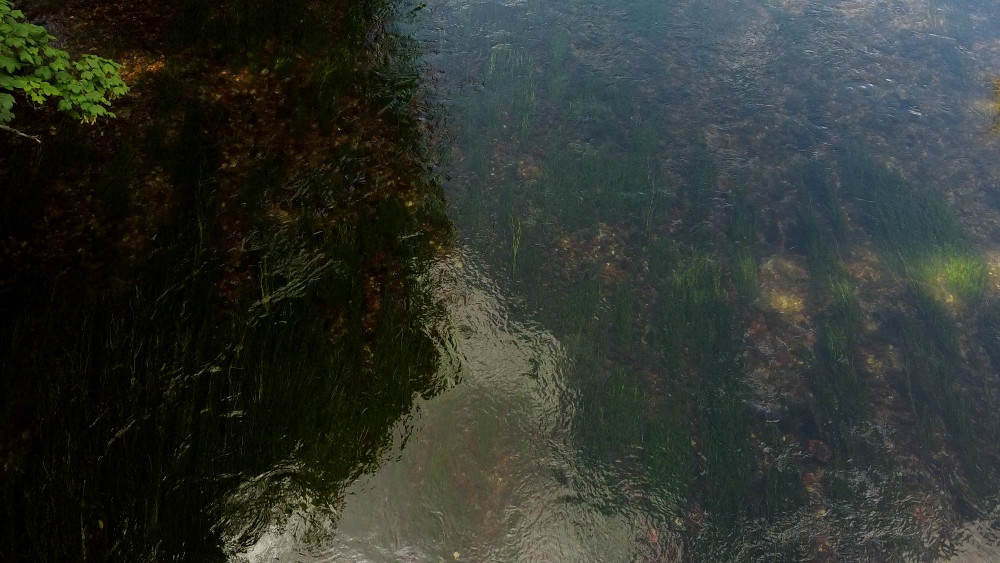
Drones aren't just useful for birds-eye photographs of rivers etc. They
can also double as general-purpose stabilised cameras, which might handy
if you're selling a vintage car, or a yacht, and you want a top-down
view.
The Mini 2 SE's operating software has some frustrating limits. The DJI
app has a number of spirally, back-and-forth, up-down-down flight modes,
but the Mini 2 can't be told to follow a series of waypoints or follow the
drone operator. It can be programmed to return to the initial take-off
point, but that's about it for intelligent navigation. If you plan to film
yourself driving around the countryside on a motorcycle, a la
FortNine, you'll need an assistant drone operator. Could you fly the drone
into position, run back to the motorcycle, drive past the drone, then
drive back, then land the drone? Well, you could, but it would be illegal,
and a massive pain.
Curiously the DJI app, DJI Fly, isn't available on Google Play. You
have to download and install it manually from DJI's website, which is
unusual. The in-built map includes an overlay of restricted airspace
zones, but it's up to you to ensure that you don't violate restricted
airspace. When DJI Fly turns on - which takes ages - the map defaults to
Beijing, which is strange because DJI is based in Shenzhen, just over the
border from Hong Kong. Do you need internet access when you fly? Not as
far as I can tell, but it's a good idea to have it so that you can keep
the map updated.
There is another issue. As far as I can tell the drone is completely
reliant on DJI Fly. If DJI ever abandons the app, or flicks a switch that
disables the Mini 2 SE, the drone will become a useless piece of junk.
Something similar happened to Parrot's drones when that company left the
consumer market. If you're really serious or just slightly paranoid my
suggestion is that you buy a second-hand Android phone, load DJI Fly onto
it, make sure it works, and then put it in a desk drawer and never connect
it to the internet.

Build-quality-wise the Mini 2 feels incredibly flimsy, but that's par for
the course for something designed to fly. It has to be as lightweight as
possible, and I can't really criticise it for feeling like a toy. The prop
blades are replaceable, and it has a removable battery, but beyond that if
something goes wrong it's basically a very lightweight brick.
Why did I buy a drone? Fourteen years ago I bought a Canon 5D MkII, which
was one of the first digital SLR cameras with a video mode. It was a
game-changer, but after using it for a while I encountered the same
problems that struck filmmakers in the early 1900s - a static camera makes
for dull cinematography. Getting a digital SLR to move smoothly is
difficult, and making a 1.5kg camera fly through the air in a controlled
manner is a major technical challenge. In that respect drones are
game-changing. Not only can they take photographs that would in the past
have required a helicopter, a la Earth From the Air, they can be
used as general-purpose stabilised cameras.
If nothing else they're extraordinarily useful for establishing shots. If
you're making a video essay and you need a shot that says "This is
Canada", "This is Rural France", "This is Iceland", a drone is fantastic.
Imagine if all the actors in a film could be mounted to robotic armatures,
and the cameras attached to drones. The entire production could be
motion-controlled and recorded for future playback. The possibilities are
endless.

Actually flying the Mini 2 SE is remarkably simple, especially if you're
used to video games. DJI Fly even has an operating mode that mimics console
controls, with the left stick controlling motion and the right stick
controlling heading. There doesn't seem to be a way to invert the Y axis, so
up is forward on the stick rather than backwards. I've managed to get used
to it. Flying a drone reminds me a little bit of playing helicopter flight
simulators on the PC. It's easy to move the drone too fast in one direction,
then overcompensate in the other direction, but if you release the controls
the drone settles into a hover.
Landing is automated. The drone refuses to descend below about two feet. At
that height the rotors generate a surprising amount of wind, so if you bring
along a portable landing pad - even if it's just a large piece of folded
cardboard - make sure to hold it down with rocks. The first time I landed my
Mini 2 SE the rotors got caught up in some grass, but there didn't appear to
be any damage. There is a thriving third party market for blade guards and
portable landing pads.
The Mini 2's biggest limitation is a general one that applies to all drones.
After a short while it's easy to exhaust the pool of local scenic spots that
look good from the air and also allow drone flights. I mentioned the
Earth From the Air chap up the page. He didn't become famous just
because he had access to a helicopter. He also had access to a huge variety
of interesting locations all around the world at sunrise or sunset, and that
took time, money, and dedication. You need those things things as well.
And that's the DJI Mini 2 SE. It's a simple take-off-and-take-photographs
drone, without the complex flight modes of more expensive drones, so if you
plan to emulate Revzilla or FortNine et al you'll need an assistant. If you
plan to make a name for yourself it would be handy to have access to Peru,
Iceland, St Helena, and an all-terrain motorcycle.
DJI sells the Mini 2 SE direct for around £249, but as mentioned earlier on
it appears to be on the verge of discontinuance, so by the time you read
this it might only be available on the used market. Is there a market for
second-hand drones? They aren't known for their robustness, but that's the
price that must be paid for being gossamer-light. The things we value...
something something. Things that fade. That was how the saying went.
Something something things that fade. How true that is.