Showing posts with label bergamo. Show all posts

Thursday, 21 March 2019

Vivitar 200mm f/3 Series 1: Fake Faces


It's Christmas once again, so let's have a look at the Vivitar 200mm f/3 Series 1, a fast-ish telephoto lens from the 1970s. I've written about this very lens before, but I recently picked up a cheap copy for the ancient Canon FD mount so I decided to try it out on a film camera, with film, in the year 2019, which is this year, which is 2019.


I've used a lot of film cameras over the last decade or so, but there are a couple of systems that I've avoided. Specifically Canon FD and Minolta MD, because there isn't an easy way to use the lenses with modern digital SLRs.

Olympus OM lenses can be adapted with a simple ring, ditto M42, Pentax K, Contax, and T-mount. Nikon F lenses still work with Nikon F cameras, mostly. The problem with Canon FD is that the camera bodies were very thin, which means that the lenses won't focus properly on modern digital SLR bodies. The focusing range is reduced so that they won't reach infinity any more. You can only use the lenses as close-range macro lenses.


FD lenses can be adapted to work perfectly well with mirrorless cameras, but in my experience using a manual focus telephoto lens with a mirrorless camera is awkward. Nonetheless I don't like having an itch I can't scratch, so I picked up a cheap Canon T70 to go with the lens.


The Vivitar 200mm f/3 is fat, short, heavy, extremely well-made. It has a lovely black finish. The body is metal. Judging by the serial number mine was built by Komine, an obscure Japanese OEM from the 1970s. I can't tell how old it is, but I'm guessing it was made in the mid-late 1970s. My lens is probably more than forty years old. That's very old. Can you imagine being forty years old? If you drink a lot, I mean a lot, you won't have to be forty years old ever.


The focusing action is still smooth and the paint has held up. Series 1 lenses were sold at a price premium, and although by modern standards they're not particularly special optically, they were built to a high standard.


That's probably why Vivitar eventually gave up up on Series 1. They must have been expensive to make. The 200mm f/3 was part of a set that included a 135mm f/2.3 and 28mm f/1.9, all of which used the same basic design language. They had shiny black paint, a bulging conical design, a solid metal build, and the aperture readout was visible through a cut-out in the mount end of the lens.


The 200mm f/3 has a built-in sliding lens hood. The length and weight is such that it's easier to carry the camera by the lens, rather than the body. There's no tripod foot. It's on the verge of needing one. On a mirrorless rangefinder the combination would be very unbalanced.


I've always wondered why Vivitar didn't just lie, and call it f/2.8. Why f/3? The T-70 in the picture identified the widest aperture as f/2.8 but that's probably because the LED didn't have a mark for f/3.

I digress. As with the 135mm f/2.3 the 200mm focuses very closely, down to 1.2m, just under four feet. That's better than a lot of modern 70-200mm zooms.


What was Series 1? It was Vivitar's top-end lens range. Some of the lenses were designed at Vivitar's behest and manufactured to order by Japanese OEMs, but a lot of them were simply rebranded imports from OEMs such as Komine, Kino, Cosina and so forth.

By far the most famous was the 70-210mm f/3.5, then in rough order the 90mm macro, the 90-180mm macro zoom, and a series of mirror lenses, and the aforementioned 28mm f/1.9, which is unusually fast for a 28mm prime even today. I've used some of them! But not all of them.


200mm is an odd focal length, about the longest that can be made cheaply to a decent quality. It's too long for indoors or low light, nowhere near long enough for wildlife or airshows, awkward for sports. On the other hand if you ever find yourself in the car park on the hill in Florence - it's called Piazzale Michelangelo, but it's a car park - 200mm is absolutely perfect for the river and the main cathedral. I know this from personal experience. 200mm is also excellent for head-and-shoulders portrait shots and distant hilly landscapes.

200mm primes nowadays play second fiddle to 70-200mm or 70-300mm zoom lenses, and for sports and wildlife photographers a 300mm f/2.8 or 400mm f/2.8 is more useful, but there are a few superstar 200mm lenses. Notably the Canon 200mm f/1.8, which was sold as both an EOS and FD lens, and also Olympus' semi-legendary 250mm f/2 - legendary because no-one on the internet appears to have one - and the Nikon 200mm f/2 of the late 1970s. There's also an overlap with a variety of classic 180mm f/2.8 lenses.

What's the 200mm f/3 like? I can't test it out formally. I have a Canon FD-EOS adapter, which lets me mount the lens on my 5D, but it won't focus to infinity because the FD mount was like that. It still focuses out to about eight feet or so. The frustrating thing is that if the adapter was slightly shorter, or the mount was shaved down a bit, the lens would focus far enough to be usable as a short portrait lens.


But I don't want to damage it - on a physical level it's in great condition - and even though it won't focus to infinity it's still usable as a short macro lens. The following image of a Canon T70 was shot with this very lens on a Canon 5D MkII using an FD-EOS adapter at f/11:


Canon's FD series had a undercurrent of perversity to it. The company wanted to differentiate their cameras from the competition, so although everybody else settled on aperture-priority exposure, Canon decided that people really wanted shutter speed priority instead.

The FD mount has a breech lock. With every other lens you push the lens into the camera mount and then rotate it until it locks. Easy! With FD lenses you have to push the lens into the mount and then hold it still while you twist the locking ring, which is difficult, especially if your hands are frozen or bloodied.

The T70 has shutter speed priority plus some program modes but it doesn't have aperture priority. I mostly put it in program-tele and forgot about it. Wide open the 200mm f/3 has a glowing softness that can be helped with Photoshop, and it also has noticeable purple fringing on highlight edges. Stopped down just slightly - the next stop after f/3 is f/4 - the softness goes away and the purple fringing diminishes although even stopped right down it's still there.

In its favour there's very little geometric distortion - perhaps a tiny bit of pincushion, but that might be a film scanning issue - and even wide open there's no vignetting, even with the hood extended. The huge front element probably has something to do with that. The purple fringing is an issue if you're shooting tree branches against an overcast sky, otherwise not really, but on the other hand it's one of those aberrations that's awkward to correct. The focusing action is smooth, dampened - there's absolutely not the slightest chance of it creeping - and it takes about three twists to go from lock to lock.


Is it any good? Do you need a 200mm lens? Vivitar also sold a bunch of 200mm f/3.5 lenses that were smaller and lighter, and of course you probably already have a 70-200-300mm zoom lens. The 200mm f/3 is compact and at f/4 it's probably better than a cheap 70-300mm lens, although it's a niche case. It doesn't have image stabilisation but I found that the weight helped to keep the camera steady (the shot of the dinner table above was at 1/125th, off the top of my head).


Oh yes, the colours. I'm not sure if it's a Vivitar thing, or a 1970s thing, or a coating thing, but in common with every Vivitar lens I have used the colour balance is relatively muted, slightly purple, slightly "gritty", although a bit of slider-dragging with Photoshop can fix that. I used Fuji Superia, the weather in Milan was 21c but the locals were all dressed in winter gear, and I had a Pastel de Nata which - get this - isn't even Italian.


Vivitar still exists, or at least the name still exists. It's one of those ghost brands, like Polaroid and Kodak, that appears in pound shops but doesn't have a headquarters building or staff because it's just a name. Like Atari or Jensen.

Somewhere out there is a man, or woman, who has a complete mental grasp of the corporate history of Atari and Infogrames. There were two Ataris, the arcade Atari and the computer Atari, and one of them was bought by Hasbro and then sold to Infogrames, who changed their name to Atari Inc, who owned Atari Interactive, and they also bought Atari Europe, and now they're called just Atari, or something, I don't know. Does a company still exist if it doesn't exist? I don't know.

Monday, 25 December 2017

Tamron 28-75mm f/2.8: The Threshold of Horror


Let's have a look at the Tamron 28-75mm f/2.8, or Tamron AF 28-75mm f/2.8 Aspherical LD XR Di SP if we're being precise. I was about to say that the Tamron 28-75mm f/2.8 has a longer name than top actress and film-maker Isabella Rossellini, whose full name is Isabella Fiorella Elettra Giovanna Rossellini, but that's not true because Isabella Rossellini's name is either three characters longer or exactly the same length, depending on whether you count / and . and - as characters, which I do, the end.


What do all those characters mean? Tamron is the name of the company. Tamron was founded in 1878 by a Peruvian man called Michael Simpson who had a dream in which snails could be harnessed to transport cargo. The company now makes lenses.

This particular lens isn't spherical, it's a tube. The rest of the name is something to do with assembly language programming. If you type LD XR Di SP into an industrial computer something happens. I don't know. It's just marketing bumpf. The lens is supposed to have special, digitally-integrated low-dispersion extra-refractive glass and one of the elements is aspherical and it focuses internally instead of expanding and it's special, but in a good way, but the same is true of every other lens Tamron makes so what's the point?


Dear reader, if you had letters after your name, what would they be? I would have the letters ST for super-terrific and K for knowledgeable and W for witty. In the real world some people have letters after their name to indicate that they have special properties, such as for example Sir Antony Arthur Acland KG GCMG GCVO, who is made of pottery, and Sir Colville Norbert Young GCMG MBE, who in addition to being governor-general of Belize can set things on fire with the power of his mind.


Was it Zeiss? With their T coating? Back in the early years of the previous century Zeiss and Leica gave their lenses names - Tessar, Summilux, Biogon, Elmar and so forth - and then Zeiss added T to indicate the special Zeiss multi-coating, and it snowballed from there and now lenses have largely meaningless strings of characters. Please stop talking.

The Tamron 28-75mm f/2/8 etc is a popular general-purpose zoom lens for film and digital SLRs, notable for its combination of full-frame coverage, f/2.8, and modest price. It's also notable for its surprisingly good performance, although the build quality is uninspiring. It focuses internally, but the inner tube / front element extends at 75mm and I'm always worried that a sharp tap will jam it. It's plastic, including the filter thread. My copy had some plastic flashes - little hairs of spurious plastic, a byproduct of the manufacturing process - around the rear element. I had to pluck them out (carefully).


The lens was launched in 2003. On a historical level it's a paradox - a cheap full-frame lens launched during the death whimpers of the 35mm film SLR, and yet Tamron's adverts pointed out that the coatings were optimised for digital sensors even though in 2003 there were only two full-frame digital SLRs*. Perhaps Tamron believed that there was going to be a market for affordable full-frame digital cameras in the near future, and wanted to get in on the ground floor. Nonetheless the 28-75mm's f/2.8 aperture seems to have been powerfully appealing to APS-C photographers, notwithstanding the odd 42-120mm range in that format.

* Three if you count the Contax N Digital, but the Tamron 28-75mm f/2.8 was never sold for the Contax N mount. The handful of Contax N users might have enjoyed it - the system never had a fast general-purpose zoom.

Zoomed to 75mm on an old Canon EOS 50E film camera. Nikon doesn't have a problem with third-party lens manufacturers but Canon refuses to hand over their lens mount data, so the likes of Tamron, Tokina and Sigma have to reverse-engineer it. Historically Tamron and Tokina have had better luck at this than Sigma.

I've owned my Tamron 28-75mm f/2.8 for six years. I was going to write about it a long time ago but I decided to take some pictures with it first. I went over the mountains yonder and kept going, and then I came back to find that my hometown was small, and nothing there would excite me any more. The lens appealed to me because firstly I hate spending money and secondly I'm not usually a fan of general-purpose zooms. General purpose zooms are portrait lenses that aren't long enough or fast enough; they're landscape lenses that aren't sharp enough or long enough; no amount of technical trickery will conjure the look of 35mm f/1.4 from a fast zoom; they're ungentlemanly; you have to spend a lot to get good performance. Next paragraph, bored with this paragraph.


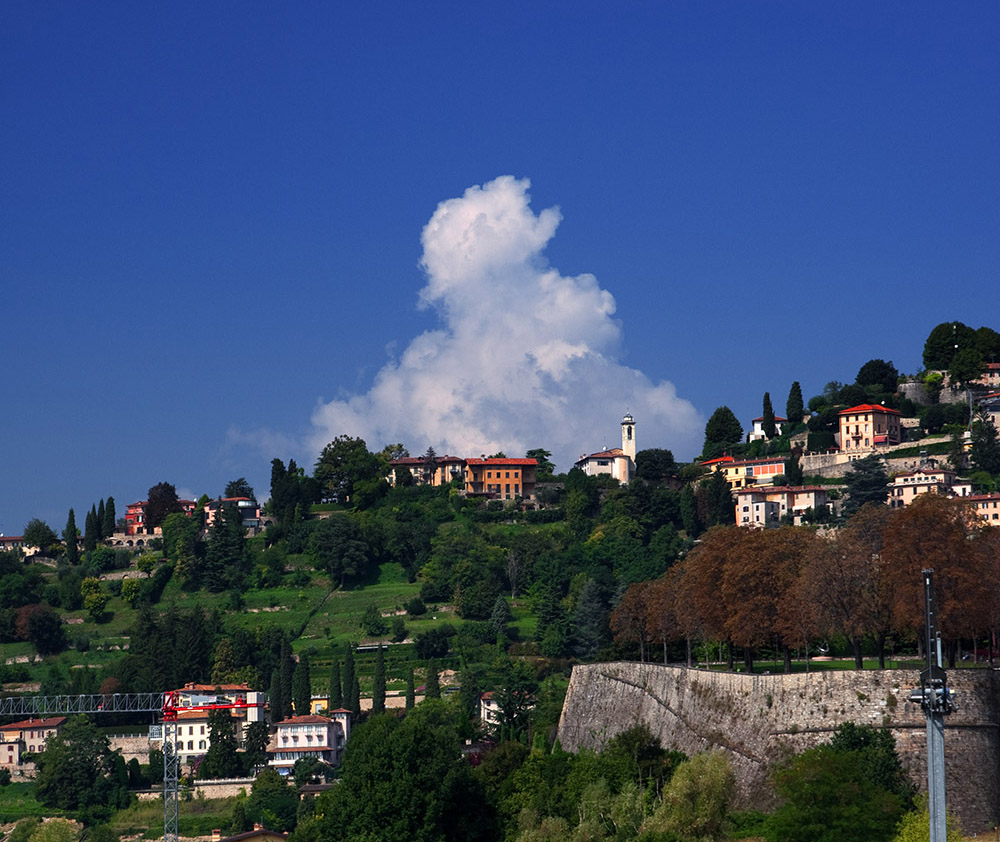
What's it like optically? Sharp in the middle at f/2.8 at all focal lengths except 75mm, but even then it's pretty good, generally good in the corners stopped down to f/8. Here's a chunk of scenery at 75mm f/8, with a polarising filter, shot with a full-frame 21mp Canon 5D MkII:


One thing. The Tamron 28-75mm has a 67mm filter thread but I found that even a slim polarising filter vignetted, so I used a metal 67-72mm step-up ring and an ordinary 72mm filter instead. Given that the lens has a plastic filter thread this is probably a good idea in general. It saves wearing out the plastic.

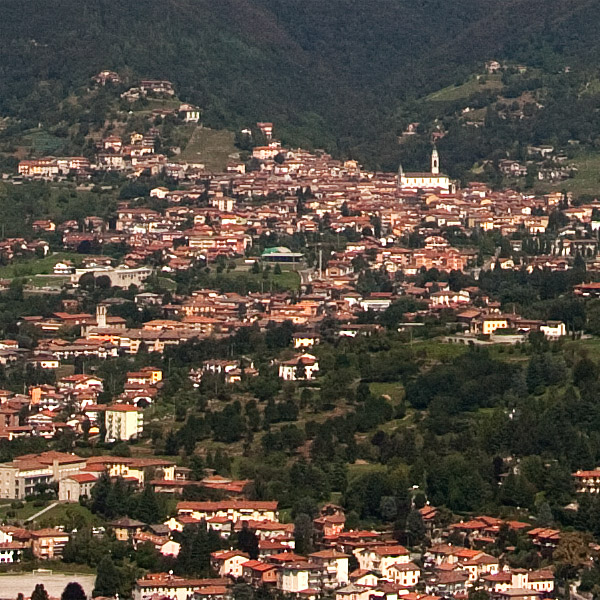
Another thing - there are lots of reports on the internet of sample variation and inconsistent performance, with several reviews pointing out that one side of their lens was sharper than the other. I'm not surprised. The build quality isn't that bad, but at 75mm the inner tube wobbles a bit, and I wouldn't be surprised if the internal components have relatively loose tolerances. Mine is slightly softer in the left-mid-upper part of the image, which is tolerable because I usually don't put things in that part of the frame except sky and clouds. Here's a 100% crop of the centre at f/8:


You can see the radio mast, and a bit of grain. I shot it at ISO 200 with Canon's "highlight tone priority" setting, which seemed like a good idea at the time but in retrospect was not. Bear in mind that this isn't a test chart; we're looking through a polarising filter and a mile of turbulent air. Here's the extreme bottom-right corner, with no sharpening but a tiny bit of CA correction:


It's good enough for me. Two hundred years ago, before the invention of photography, I would have simply looked at that scene. I wouldn't have thought about how to present it for an audience of strangers on the internet. I would have looked at the scene and walked away and no-one would ever have known; or I would have sat and painted it. Painted the hill and the trees and the church and the empty fields around it. Think of how horrible it was before Facebook and Twitter. People lived lives without meaning, without value. They just lived and died and ended up buried somewhere and no-one remembered what they did. If I had been born two hundred years ago my gravestone would now be landfill beneath a housing estate.


But provided you subscribe to me and hit the like button and also donate to my Patreon, my life now has meaning, and so does yours! We're not just going to die and be forgotten. One thousand years from now my blog will still be cherished by an audience of millions, and so will you! Women will imagine what it must have been like to meet me. Men will wish they had been me. Also, I do voiceovers. I own a Neumann U47 FET and a pop-shield. The guy who does Forgotten Weapons doesn't own a pop-shield.

The lens focuses quite closely at 75mm, and the bokeh is surprisingly good at that aperture.

At 50mm or so the bokeh isn't as good, however. This is the thing with general-purpose zooms. You either use them at 24mm or 70mm, so why not carry an ultrawide zoom and a compact telephoto and a 50mm or 35mm f/1.4 instead? Because you'd be walking everywhere with a backpack, that's why. Unless you use a compact camera, but then the image quality isn't as good. But what does it matter given that some of the most iconic photos of the modern age are shot at close range with an iPhone? Depression, uncertainty and doubt are constant companions of the photographer.

More mountains at 28mm also f/8:


In the centre:


And the corner, which falls apart a bit in the last hundred or so pixels, but I have seen worse:


I have seen worse. I have seen so much worse. The threshold of horror has no lower limit. That's what keeps me going. The knowledge that no matter how bad things get, I am still at the top of the slope. Heading downhill, but the same is true of the other passengers. They are heading downhill as well. We are all heading downhill together. All of us, together.


Unusually for a thing featured on my blog the Tamron 28-75mm f/2.8 is still on sale. I think. Tamron's UK website doesn't list it, but it's still available online. Tamron also sells an image stabilised 24-70mm f/2.8 zoom, but it's a lot more expensive.


The 28-75mm f/2.8 is or was available in Canon, Nikon, Pentax, and Minolta/Sony full-frame lens mounts, the latter particularly odd given that neither Pentax nor Konica Minolta had a full-frame digital SLR in 2003 (Pentax had once had been having a full-frame digital SLR, but nothing came of it). The Nikon version originally had an aperture ring and screw-driven autofocus; a later revision took away the aperture ring but added an internal motor so it will focus on Nikon cameras that don't have a screw drive. This may be true of the Pentax version as well, I'm not sure.


Does the 28-75mm make any sense? Yes, provided you don't have a track record of bashing your lens against things. In the UK at least Tamron has a five-year warranty. Tamron reverse-engineers the Canon EOS lens mount system, but as with Tokina I've never heard of Tamron lenses failing to work with EOS cameras. This very lens focuses and works perfectly well in both ordinary autofocus and live view on my 5D MkII, and my old 10D, and for that matter my EOS 50e film camera. Brand new the lens sells for £300-400, on the used market it appears to halve in value before diminishing to zero if it breaks; of course two broken Tamron 28-75mm f/2.8s could have bought you a single excellent-condition used Canon 24-70mm f/2.8L but that's up to you, the end.