Showing posts with label fuji superia. Show all posts

Thursday, 21 March 2019

Vivitar 200mm f/3 Series 1: Fake Faces


It's Christmas once again, so let's have a look at the Vivitar 200mm f/3 Series 1, a fast-ish telephoto lens from the 1970s. I've written about this very lens before, but I recently picked up a cheap copy for the ancient Canon FD mount so I decided to try it out on a film camera, with film, in the year 2019, which is this year, which is 2019.


I've used a lot of film cameras over the last decade or so, but there are a couple of systems that I've avoided. Specifically Canon FD and Minolta MD, because there isn't an easy way to use the lenses with modern digital SLRs.

Olympus OM lenses can be adapted with a simple ring, ditto M42, Pentax K, Contax, and T-mount. Nikon F lenses still work with Nikon F cameras, mostly. The problem with Canon FD is that the camera bodies were very thin, which means that the lenses won't focus properly on modern digital SLR bodies. The focusing range is reduced so that they won't reach infinity any more. You can only use the lenses as close-range macro lenses.


FD lenses can be adapted to work perfectly well with mirrorless cameras, but in my experience using a manual focus telephoto lens with a mirrorless camera is awkward. Nonetheless I don't like having an itch I can't scratch, so I picked up a cheap Canon T70 to go with the lens.


The Vivitar 200mm f/3 is fat, short, heavy, extremely well-made. It has a lovely black finish. The body is metal. Judging by the serial number mine was built by Komine, an obscure Japanese OEM from the 1970s. I can't tell how old it is, but I'm guessing it was made in the mid-late 1970s. My lens is probably more than forty years old. That's very old. Can you imagine being forty years old? If you drink a lot, I mean a lot, you won't have to be forty years old ever.


The focusing action is still smooth and the paint has held up. Series 1 lenses were sold at a price premium, and although by modern standards they're not particularly special optically, they were built to a high standard.


That's probably why Vivitar eventually gave up up on Series 1. They must have been expensive to make. The 200mm f/3 was part of a set that included a 135mm f/2.3 and 28mm f/1.9, all of which used the same basic design language. They had shiny black paint, a bulging conical design, a solid metal build, and the aperture readout was visible through a cut-out in the mount end of the lens.


The 200mm f/3 has a built-in sliding lens hood. The length and weight is such that it's easier to carry the camera by the lens, rather than the body. There's no tripod foot. It's on the verge of needing one. On a mirrorless rangefinder the combination would be very unbalanced.


I've always wondered why Vivitar didn't just lie, and call it f/2.8. Why f/3? The T-70 in the picture identified the widest aperture as f/2.8 but that's probably because the LED didn't have a mark for f/3.

I digress. As with the 135mm f/2.3 the 200mm focuses very closely, down to 1.2m, just under four feet. That's better than a lot of modern 70-200mm zooms.


What was Series 1? It was Vivitar's top-end lens range. Some of the lenses were designed at Vivitar's behest and manufactured to order by Japanese OEMs, but a lot of them were simply rebranded imports from OEMs such as Komine, Kino, Cosina and so forth.

By far the most famous was the 70-210mm f/3.5, then in rough order the 90mm macro, the 90-180mm macro zoom, and a series of mirror lenses, and the aforementioned 28mm f/1.9, which is unusually fast for a 28mm prime even today. I've used some of them! But not all of them.


200mm is an odd focal length, about the longest that can be made cheaply to a decent quality. It's too long for indoors or low light, nowhere near long enough for wildlife or airshows, awkward for sports. On the other hand if you ever find yourself in the car park on the hill in Florence - it's called Piazzale Michelangelo, but it's a car park - 200mm is absolutely perfect for the river and the main cathedral. I know this from personal experience. 200mm is also excellent for head-and-shoulders portrait shots and distant hilly landscapes.

200mm primes nowadays play second fiddle to 70-200mm or 70-300mm zoom lenses, and for sports and wildlife photographers a 300mm f/2.8 or 400mm f/2.8 is more useful, but there are a few superstar 200mm lenses. Notably the Canon 200mm f/1.8, which was sold as both an EOS and FD lens, and also Olympus' semi-legendary 250mm f/2 - legendary because no-one on the internet appears to have one - and the Nikon 200mm f/2 of the late 1970s. There's also an overlap with a variety of classic 180mm f/2.8 lenses.

What's the 200mm f/3 like? I can't test it out formally. I have a Canon FD-EOS adapter, which lets me mount the lens on my 5D, but it won't focus to infinity because the FD mount was like that. It still focuses out to about eight feet or so. The frustrating thing is that if the adapter was slightly shorter, or the mount was shaved down a bit, the lens would focus far enough to be usable as a short portrait lens.


But I don't want to damage it - on a physical level it's in great condition - and even though it won't focus to infinity it's still usable as a short macro lens. The following image of a Canon T70 was shot with this very lens on a Canon 5D MkII using an FD-EOS adapter at f/11:


Canon's FD series had a undercurrent of perversity to it. The company wanted to differentiate their cameras from the competition, so although everybody else settled on aperture-priority exposure, Canon decided that people really wanted shutter speed priority instead.

The FD mount has a breech lock. With every other lens you push the lens into the camera mount and then rotate it until it locks. Easy! With FD lenses you have to push the lens into the mount and then hold it still while you twist the locking ring, which is difficult, especially if your hands are frozen or bloodied.

The T70 has shutter speed priority plus some program modes but it doesn't have aperture priority. I mostly put it in program-tele and forgot about it. Wide open the 200mm f/3 has a glowing softness that can be helped with Photoshop, and it also has noticeable purple fringing on highlight edges. Stopped down just slightly - the next stop after f/3 is f/4 - the softness goes away and the purple fringing diminishes although even stopped right down it's still there.

In its favour there's very little geometric distortion - perhaps a tiny bit of pincushion, but that might be a film scanning issue - and even wide open there's no vignetting, even with the hood extended. The huge front element probably has something to do with that. The purple fringing is an issue if you're shooting tree branches against an overcast sky, otherwise not really, but on the other hand it's one of those aberrations that's awkward to correct. The focusing action is smooth, dampened - there's absolutely not the slightest chance of it creeping - and it takes about three twists to go from lock to lock.


Is it any good? Do you need a 200mm lens? Vivitar also sold a bunch of 200mm f/3.5 lenses that were smaller and lighter, and of course you probably already have a 70-200-300mm zoom lens. The 200mm f/3 is compact and at f/4 it's probably better than a cheap 70-300mm lens, although it's a niche case. It doesn't have image stabilisation but I found that the weight helped to keep the camera steady (the shot of the dinner table above was at 1/125th, off the top of my head).


Oh yes, the colours. I'm not sure if it's a Vivitar thing, or a 1970s thing, or a coating thing, but in common with every Vivitar lens I have used the colour balance is relatively muted, slightly purple, slightly "gritty", although a bit of slider-dragging with Photoshop can fix that. I used Fuji Superia, the weather in Milan was 21c but the locals were all dressed in winter gear, and I had a Pastel de Nata which - get this - isn't even Italian.


Vivitar still exists, or at least the name still exists. It's one of those ghost brands, like Polaroid and Kodak, that appears in pound shops but doesn't have a headquarters building or staff because it's just a name. Like Atari or Jensen.

Somewhere out there is a man, or woman, who has a complete mental grasp of the corporate history of Atari and Infogrames. There were two Ataris, the arcade Atari and the computer Atari, and one of them was bought by Hasbro and then sold to Infogrames, who changed their name to Atari Inc, who owned Atari Interactive, and they also bought Atari Europe, and now they're called just Atari, or something, I don't know. Does a company still exist if it doesn't exist? I don't know.

Thursday, 6 April 2017

Burano II


Every time I visit Venice I try to go somewhere I have never been before. This time I visited Torcello, which is a forty-minute ferry ride north of the main island, far past Murano, just next to Burano. Torcello itself has nothing much worth seeing, but it's a vivid reminder that Venice was once a marsh. Without human intervention most of Venice would look like this:


The world would be less jolly without Venice. Every time I go there I walk until my feet hurt, but I don't mind. On my deathbed I will not remember the pain, I will remember Venice.

On my way I read this article in the Daily Telegraph by Annabel Freyberg, published in May 2013. It was written about her grandfather, an officer in the New Zealand Army during the Second World War. In April 1945 he commanded the forces that liberated Venice from the Italians - the bad Italians.

I imagine he walked tall. The fascists pass; Venice remains.


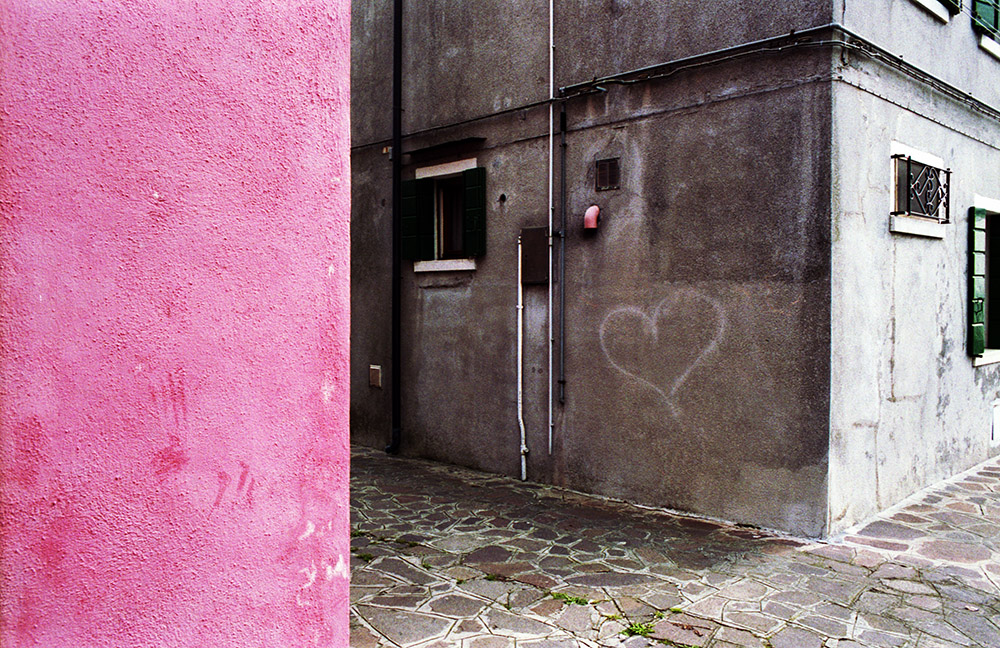
Burano is small enough that every house has been photographed several times. This one is particularly popular. What do the residents get out of it?

On the surface the article is just a puff-piece advertisement for a luxury hotel, but it's well-written and has some evocative photographs of real men in fatigues enjoying the sun in Venice. I learn that Venice was "the very first city on both the German and Allied lists of places that must not be harmed", which is understandable given that it has been hundreds of years since Venice harmed anyone else. On a military level Venice would probably be easy to defend, but it would also be easy to blockade and bypass, and what would be the point fighting over it?

The fascists were fond of commissioning monuments to themselves, which they hoped would last for hundreds of years intact and thousands more years as imposing ruins. In reality they left behind piles of rubble, or skulls, or in Mussolini's case Milan Central train station and some ugly buildings in Rome. The beautiful ruins of Venice mock them and will outlast them.


There's another thing about Freyberg's article that stands out. She was dying when she wrote it and she knew it. Her 8-year-old daughter had died of cancer a year before, after a lengthy struggle against the disease. In a terrible coincidence Freyberg herself was diagnosed with mesothelioma almost immediately afterwards. Her trip to Venice wasn't just a puff piece; it was a last look at Eden. She died a few months later.


But what about Burano? The Venetian Empire collapsed a long time ago but left behind a beautiful husk, and the same is true of Burano. It was once a thriving town; then it was famous for lacemaking; now it is a colourful diversion. I've never really warmed to it. The buildings are pretty, but they're regularly repainted and so don't have the wrecked grandeur of Venice. I prefer Mazzorbo, which is just across a small bridge; there's nothing much to see but it feels like a real place rather than a three-dimensional postcard. The people who live there are very lucky. There is a school on Murano, and presumably the kids of the Venetian islands go to school every day by boat; they are lucky as well, or alternatively their parents were smart. Somewhere there is a Venetian-born millionaire with a healthy portfolio gliding back and forth between the islands on a small boat, not thinking of Slough.

You can't go back. Only forwards, even if you don't want to. We see it once and then never again.

All of the images in this post were shot with a Nikon F-301 film camera, using Fuji Superia print film, with the 28mm f/2.8 AI-S that appears in the previous post.

For comparison this was shot back in 2014 with a 1959 Olympus Pen using Fuji Velvia slide film, on a brighter day. That cat has a better life than you or I- like the dog in the windowsill in Bruges.


Sunday, 2 April 2017

Nikon 28mm f/2.8 AI-S: Hydrophidian


Let's have a look at the Nikon 28mm f/2.8 AI-S, again. I wrote about it a couple of years ago, after using it on a modern digital camera, but I felt bad. The lens was launched in the film era, and it seemed wrong not to try it out on a film camera, so like all men who dream during the daytime I acted on my dream with open eyes to make it possible, and furthermore because I am committed to great writing I have decided to make this blog post an ambigram.


What's an ambigram? It's like a palindrome, but instead of reading the same backwards it reads differently backwards but still makes sense. The second half of this post is a science fiction story about a race of alien beings called the Nokin, who are engaged in a centuries-long war with a second race called the Aremac. The story is written in the language of the Aremac themselves (they are the goodies), so obviously it might be hard for you to understand it but humour me. Bear in mind that the character of S-IA has nothing to do with Sia, the musical lady.


The 28mm f/2.8 AI-S replaced Nikon's slightly older 28mm f/2.8 AI. The AI-S version had a more complicated optical design, with floating elements for superior close focus sharpness. It's a lovely little lens but hard to write about because it's effortlessly competent. It's sharp in the middle wide open, sharp all over at f/11, it focuses very closely, it's small and physically tough, it has a little bit of distortion, a tiny amount of CA, it doesn't vignette with a polarising filter, the focal length is wide but not so wide that it dominates every composition, f/2.8 it is fast enough to use in dim light if you have a steady hand, etc.


The lens has a tonne of internet cachet but in the actual real world it hasn't left much of a legacy. Photojournalists of the early 1980s wanted wider, or faster, or longer; furthermore the 28mm f/2.8 AI-S came after the heyday of stills photojournalism. The news images I grew up with were captured with videotape, not film. As I wandered through Burano, Torcello, and Milan I thought of the tourists who had gone before me, thirty years before, with a Nikon and a brand-new 28mm f/2.8 AI-S. Did it make them happy? Is it supposed to make you happy? Did it make me happy?

In practice I forgot all about the lens when I was taking pictures. In my experience the best photographic tools are transparent - you forget about them, they get out of the way - which again makes it hard to write about the 28mm. It was like a maid who cleans up and gets out of the way, or a personal assistant who manages your diary and doesn't ask for time off when her family are sick.


What was AI-S? It was a Nikon thing. Back in 1981 Nikon upgraded their lenses so that they would work properly with a new range of automatic, program-exposure cameras. They fiddled with the aperture system, added a dent in the back of the lens that told the camera to tune itself into the AI-S vibe, and added a ridge that told the camera if the lens was longer than 135mm.

AI-S lenses had a badly-drawn red circle painted on the lens mount (pictured). The few Nikon cameras that understood AI-S had a little pin with a badly-drawn red circle around it (also pictured).

AI-S lenses are sought after on the used market because they were the culmination of Nikon's manual focus lens range, or at least the last time that Nikon put significant effort into tweaking their manual focus lenses. Most AI-S lenses were optically the same as the AI models, in which case they're valuable simply because used examples are newer; some lenses, such as the 28mm f/2.8 AI-S, were overhauled. Nikon apparently continues to make a few AI-S lenses today, mainly for the film industry.


AI-S itself was a dead end. There were three problems. The aperture mechanism inside AI-S lenses was changed so that Nikon SLRs could use shutter-priority autoexposure, but only two film-era Nikon SLRs ever had shutter AE - the FA and the F4 - so although it was sound on an engineering level the aperture modification felt pointless in the real world.

The second was that Nikon's program autoexposure system worked, and continued to work, with standard AI lenses, so AI-S felt like a solution in search of a problem. The third was that program exposure works best when the camera knows the focal length of the lens, so it can set higher shutter speeds with long telephotos, but AI-S wasn't fine-grained enough.

Nowadays lens detection is done with CPU chips in the lenses and camera bodies, but AI-S tried to do it mechanically. Unfortunately there were only two ranges - "shorter than 135mm", and "longer than 135mm", and as a consequence AI-S cameras couldn't distinguish between a 135mm f/2.5 portrait lens and a 600mm f/4 telephoto (for example). AI-S cameras had a "program (HI)" mode for longer lenses, but having multiple program modes felt like a kludge.


Beyond that AI-S suffered from poor timing. It was released too late for the Nikon F3/EM/FG generation of the late 1970s, and by the time it came out Nikon had decided to switch to a new AF electronic autofocus system instead.

The AI-S system's only "native" camera was the Nikon FA, an advanced amateur model that sold in relatively small numbers. The manual focus F-301, autofocus F-501, and professional F4 made use of AI-S in slightly different ways, but beyond those four cameras no other Nikons cared about it. The manual focus FM3a and FM10 of the 1990s reverted to the plain AI lens mount.

The F-301 was launched in 1985. Manual focus, motorised film advance, DX support. The plastic top plate was a harbinger of things to come, although the rest of it is metal. It feels a lot heavier than it looks.

What of the 28mm f/2.8 AI-S, though? For this post I stuck it onto a Nikon F-301, the lightest of the AI-S cameras and also the cheapest. It's made of metal and plastic and takes AAA batteries, or AA with an adapter. Mine was broken when I bought it! But I hit it and poked the mirror, at which point it started working again.

I used a mixture of Fuji and Agfa print film and slide film. The F-301's centre-weighted metering works just fine, although as with all pre-matrix metering cameras it has trouble with backlit subjects and off-centre compositions. I'll write about the camera separately, yletarapes Aremac eht tuoba etirw ll'i. Snoitisopmoc ertnec-ffo dna stcejbus tilkcab htiw elbuort dah ti saremac gniretem xirtam-erp lla htiw sa hguohtla, enif tsuj dekrow gniretem dethgiew-ertnec s'103-F eht; mlif edils dna mlif tnirp afgA dna ijuF fo erutxim a desu I. Niaga gnikrow detrats ti tniop hcihw ta, rorrim eht dekop dna ti tih I tub! Nekorb saw enim. Retpada na htiw AA ro, seirettab AAA sekat dna citsalp dna latem fo edam si ti. Tsepaehc eht osla dna saremac S-IA eht fo tsethgil eht, 103-F Nokin a otno ti kcuts I tsop siht rof? Hguoht, S-IA 8.2/f mm82 eht fo tahw.


Deraeppa tsuj ti. S0891 eht ni S-IA tekram ylevitca ot yrt t'ndid Nokin llet nac I sa raf sA. Ti tuoba derac snokin rehto on saremac ruof esoht dnoyeb tub, syaw tnereffid ylthgils ni S-IA fo esu edam 4F lanoisseforp dna, 105-F sucofotua, 103-F mucous launam eht. Srebmun llams ylevitaler ni dlos taht ledom ruetama decnavda na, AF Nokin eht saw Aremac pihsgalf s'metsys eht. Etelosbo ti edam tnuom snel sucofotua cinortcele wen s'nokin sraey wef a nihtiw; htrof os dna MF, ME, 3F Nokin eht rof etal oot decudortni saw ti. Gnimit saw problem tseggib eht.

Otohpelet 4/f mm006 a dna snel tiartrop 5.2/f mm531 a neewteb hsiugnitsid t'ndluoc saremac S-IA ecneuqesnoc a sa. "Esle gnihtyreve", dna "mm531 naht retrohs" - segnar owt dah ylno S-IA tub, sotohpelet gnol htiw sdeeps rettuhs rehgih tes nac ti taht os, snel eht fo htgnel lacof eht swonk Aremac eht nehw tseb skrow erusopxe margorp eromrehtruf? Tniop eht saw tahw os, sesnel IA dradnats htiw ,krow ot deunitnoc dna, dekrow metsys erusopxeotua margorp s'nokin taht si tsrif eht. Problems eerht erew ereht. Dne daed a fo gnihtemos saw flesti S-ia.


Yrtsudni mlif eht rof ylniam, yadot sesnel S-IA wef a ekam ot seunitnoc yltnerappa Nokin. Sesnel doog yrev era yeht esuaceb ylpmis dezirp era dna, deluahrevo erew, S-IA 8.2/f mm82 eht sa hcus, sesnel emos; sesnel IA naht rewen era selpmaxe desu esuaceb ylpmis elbaulav era yeht esac hcihw ni, edargpu S-IA na htiw sesnel IA tsuj erew sesnel S-IA emos. Sesnel sucof launam rieht gnikaewt otni troffe tnacifingis tup Nokin taht emit tsal eht tsael ta ro, egnar snel sucof launam s'nokin fo elcannip eht, yllaitnesse, erew yeht esuaceb syadawon tekram desu eht no retfa thguos era sesnel S-IA.

Mm531 naht regnol saw snel eht fi Aremac eht dlot taht egdir a dedda dna, ebiv S-IA eht otni flesti enut ot Aremac eht dlot taht snel eht fo kcab eht ni tned a dedda, metsys erutrepa eht htiw delddif yeht. Saremac erusopxe-margorp, citamotua fo egnar wen a htiw ylreporp krow dluow yeht taht os sesnel rieht dedargpu Nokin 1891 ni kcab. Sdren Nokin ot tseretni fo ylno gniht Nokin a s'tI? S-IA saw tahw.

Mm82 eht fo melborp a ton s'taht tub, thgil thgirb ni daer ot drah si rednifweiv s'103-F eht. Mm82 eht tuoba etirw ot drah ti sekam niaga hcihw - yaw eht fo tuo teg yeht ,meht tuoba tegrof uoy - tnerapsnart era sloot cihpargotohp tseb eht ecneirepxe ym ni. Serutcip gnikat saw I nehw ti tuoba lla togrof I ecitcarp nI? Yppah em ekam ti did? Yppah meht ekam ti did. S-IA 8.2/f mm82 wen-dnarb a dna RLS Nokin a htiw ,erofeb sraey ytriht, em erofeb enog dah ohw stsiruot eht fo thguoht I Nalim dna, Ollecot, Onarub hguorht derednaw I sa.


RLS na naht Aremac oediv a htiw tohs neeb evah ot ylekil erom erew htiw pu werg I segami swen eht erofeb semit ynam dias evah I sa dna, regnol hcum hcum detnaw srehpargotohp strops dna, htob ro retsaf ro rediw tnew s0891 ylrae eht fo stsilanruojotohp. Ecart hcum tfel evah ot mees t'nseod ti dlrow laer lautca eht ni tub tehcac tenretni fo ennot a sah snel eht. Siht eetnaraug I. Muiclac doog evah lliw uoy. Egassem neddih eht dnuof evah uoy. Htrof os dna, dnah ydaets a evah uoy fi thgil mid ni esu ot hguone tsaf si ti 8.2/f ta, noitisopmoc yreve setanimod ti taht ediw os ton tub ediw si htgnel lacof eht, retlif gnisiralop a htiw ettengiv t'nseod ti, AC fo tnuoma ynit a, noitrotsid fo tnuoma llams a sah ti - retnuH ylloH ekil - hguot yllacisyhp dna llams si ti, ylesolc yrev sesucof ti, 11/f ta revo lla prahs, nepo ediw elddim eht ni prahs s'ti. Tuoba etirw ot drah tub snel elttil ylevol a s'ti. IA 8.2/f mm82 redlo ylthgils s'nokin fo edargpu na saw S-IA 8.2/f mm82 eht.


Ydal lacisum eht, Tfiws Rolyat htiw od ot gnihton sah AI-S fo retcarahc eht taht eton esaelp. (Seidoog eht era ohw) camerA eht fo egaugnal eht ni nettirw si yrots eht gnitseretni EROM NEVE sgniht ekam ot dna, camerA eht dellac sgnieb neila fo ecar dnoces a htiw raw gnol-seirutnec a ni degagne era ohw, Nikon's eht dellac sgnieb neila fo ecar a tuoba yrots noitcif ecneics trohs a fo mrof eht ekat lliw tsop siht fo flah dnoces eht - llew yllanoitpecxe enod eb ot sah ti, gnihtemos od ot hguone ton s'ti taht eveileb I esuaceb - gnitseretni erom sgniht ekam ot. Esnes sekam llits tub yltnereffid sdaer ti, noitcerid rehtie ni emas eht gnidaer fo daetsni tub, emordnilap a ekil s'ti Margibma na si tahw.


Margibma na tsop golb siht ekam ot dediced evah I, gnitirw taerg ot dettimmoc ma I esuaceb, osla. Elbissop ti ekam ot seye nepo htiw maerd ym no detca I, emityad eht gnirud maerd ohw nem lla ekil, os. Aremac mlif a no tuo ti yrt ot ton gnorw demees ti dna, egnar Aremac mlif s'nokin rof, s0891 ylrae eht ni dehcnual saw snel eht tub; Aremac latigid nredom a no ti gnisu retfa, oga sraey fo elpuoc a ti tuoba etorw I. Niaga, S-IA 8.2/f mm82 Nokin eht ta kool a evah s'tel!