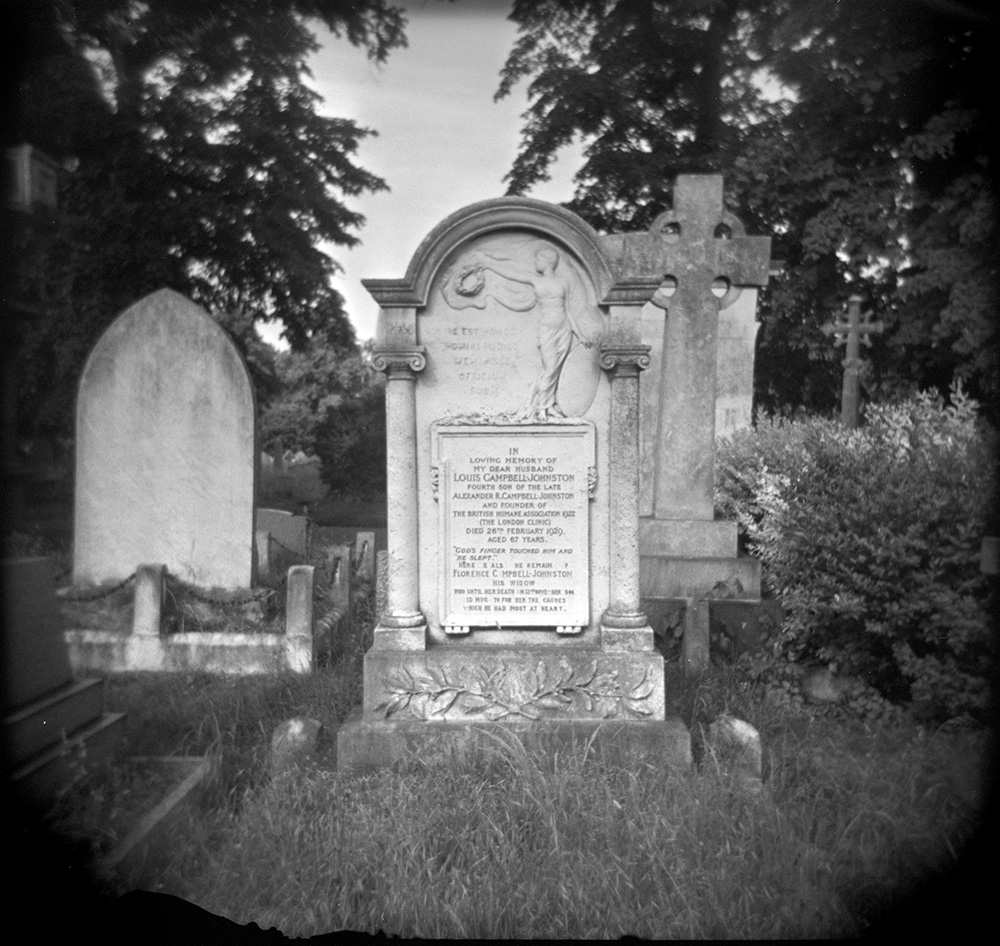
The gravestones face towards the sea. The soldiers stormed the beach against light resistance, but were unable to push inland. By the time the Allies broke free, Operation Shingle had produced enough casualties to fill three graveyards, and for each gravestone at Anzio and the surrounding area there are many more, scattered in cemeteries back home, wherever that is.


One of two Commonwealth cemeteries at Anzio; this one is a short walk from the train station. The high water mark of a tide stained with blood.
It's hard to put a cheerful gloss on the Anzio landings. They were conceived in late 1943. At the time, the Allies were fighting their way north through Italy, but had been stopped dead at the Gustav Line, a string of mountain fortifications that ran across the middle of the country. Anzio was behind the Gustav Line, and if a surprise landing could be made there the Germans would have to draw forces back from around the Monte Cassino area, which would allow the Allies to punch through. But the preparations for Overlord left too few landing craft and supplies for Anzio, and so the plans were shelved.
Anzio was also a short drive from Rome, which was up the coast, further north. Rome was not the original target, but it seems that Winston Churchill got wind of the plan and pushed for it to be remounted in the hope that the landings might swiftly capture the Italian capital. Shingle then developed a momentum of its own.
Here's Google Earth's rendition of Anzio and the surrounding terrain. Anzio is close to the camera; the Alban Hills are off in the distance, Rome is off to the left:

Command was given to General John Lucas, who will be remembered forevermore as the man who skilfully landed sixty thousand men on 22 January 1944, taking the Germans by surprise, but who then stayed put for several days while the Germans brought up reinforcements.
His orders were vague. He was to "advance on the Alban Hills", and so he advanced inland a few miles, dug out a network of trenches, and stopped. Judging by the official history, he believed that he could defend the beachhead or advance inland, but not do both. The Allied High Command, meanwhile, seemed to be unsure whether Anzio should be a decisive strike or merely a diversion for a larger attack on the Gustav Line, which in practice never took place.

Lucas eventually launched his breakout bid on the night of 29 January, coincidentally just as the Germans were preparing to sweep his forces from the beachhead. The breakout failed. In one incident the 1st and 3rd Ranger battalions were assigned to sneak into the town of Cisterna under cover of darkness, which almost worked; but they ran into a force of Panzers. The Rangers had light weapons and were caught without cover in an open field, and of the 767 sent to take the town only six returned. The eventual German offensive failed to dislodge Lucas, and the battle thereafter turned into a bloody stalemate. Lucas was sent home on 22 February. He was assigned deputy command of the US Fourth Army, which spend the war at home, defending the US West Coast. He died in 1949, at the age of 59.
Ever since then history buffs have debated whether Lucas was a timid commander who wasted a lot of men and equipment or a decent man given an impossible task. On the first day he landed with a force of infantry, but no tanks and very few vehicles. The Germans outnumbered him, and were emplaced in the mountains. Although the Wehrmacht was plagued with problems, their lines of supply were shorter and more secure than those of the Allies. Allied air and naval forces had regional superiority but were hampered by the winter weather, and the general consensus seems to be that Lucas could have taken the Alban Hills but not held them. The Germans would have cut his troops off, leaving Lucas with a skeleton force to hold the beachhead. The battle would presumably have continued as it did in real life, with the cemeteries slightly further inland.


Anzio itself is a pleasant day out from Rome
The breakout from Anzio eventually took place in May, but even then the victory was tainted by controversy. Instead of pushing inland and smashing the Germans, the Allied forces wheeled north towards Rome, which they took on 04 June. This was no doubt heartening to the people back home, but it gave the Germans time to withdraw further north. The fighting in Italy continued right until the very end of the war in Europe. The remaining German forces in Italy only surrendered a week before VE day.
~
Anzio is famous to people of my generation - people slightly older than my generation, people of my older brother's generation, if I had an older brother - from "When the Tigers Broke Free", a song by Roger Waters, performed by Pink Floyd. It was originally going to appear on the band's 1979 album The Wall but was instead held back for the 1982 film. Roger Waters' father, Lt Eric Fletcher Waters, was killed on the morning of 18 February during the second German counter-attack. Roger Waters was a baby at the time and never knew his father. Over the course of Pink Floyd's career this ate away at Roger Waters' well-being until the accumulated resentment exploded all over The Wall and The Final Cut. "When the fight was over / we spent what they had made."
A scan of the after-action report reveals that Waters' Z Company found itself in the path of a widespread German infantry attack, supported by armour, and that neighbouring R Company was unable to assist. Waters (misspelled as Walters) died sometime between 11:10 and 11:30. By coincidence Roger Waters visited the Anzio area a few months before me. It seems a memorial to Eric Waters was unveiled at nearby Aprilia. As far as I can tell this is inside the grounds of a technical college and isn't accessible to the public (as this news story points out).


The American Cemetery at Nettuno. Not a bad place to spend the rest of eternity. Alonzo Bell was presumably killed during the final stages of Operation Husky, the invasion of Sicily.
There are three cemetery complexes in the Anzio area. Between them the two Commonwealth cemeteries hold 3,000 casualties; the Sicily-Rome American Cemetery and Memorial has 7,000 graves, including casualties from the invasions of Sicily and the battles at Salerno. I took the train to Nettuno and then walked to Anzio, which takes about twenty minutes along a straight paved road.
Operation Shingle has some parallels with Operation Chromite, the UN assault of Inchon during the Korean War. In both cases they were landings behind enemy lines, close to a capital city, with the goal of diverting enemy forces from the front lines further south. But Inchon was the main event, and Douglas MacArthur was better-equipped than Lucas. Furthermore Inchon was far to the enemy's rear, and the North Korean forces were thinly-spread. Inchon was a big success, but MacArthur eventually pushed too far into North Korea and was removed from command when it became apparent that he wanted to use nuclear weapons against China.
The odd thing is that both battles are largely forgotten nowadays. Anzio because it was a failure, overshadowed by D-Day; Inchon because it seemed too easy, and took place during a war that has itself been forgotten. They belong to a bygone age of large-scale, opposed amphibious assaults which are unthinkable today. A large amphibious assault force is very vulnerable to a nuclear strike, and when the fighting finally ceases there would not be enough free land to bury the bodies and no-one to bury them.